Multiple US military planes land in northeastern Nigeria amid growing counterterrorism collaboration.
No fewer than three United States military aircraft reportedly landed at Nigerian military bases in Borno State and other parts of the northeast between Thursday and Friday, delivering ammunition and other logistical support.
Senior officers at Nigeria’s Defence Headquarters confirmed that the aircraft transported ammunition supplied by the US government as part of ongoing security cooperation aimed at tackling insurgency and other forms of insecurity in the country.

According to the officers, who spoke separately on condition of anonymity, the deliveries followed recent bilateral security discussions between Nigeria and the United States.
“After Nigeria–US talks on security, the American government is not only providing personnel support but also logistics such as ammunition to assist in fighting insurgents,” one senior officer said.
Another high-ranking military source explained that such deliveries are part of routine operational logistics, noting that ammunition often needs to be replenished after sustained military operations.
“We go for operations and expend different calibres of ammunition, which must be replaced. US aircraft have supplied ammunition for our platforms before, and this is not the first time,” the officer said.
He added that both governments, working under the coordination of Nigeria’s National Security Adviser, are strengthening cooperation to address insecurity, making further aircraft and personnel deployments likely.
The New York Times reported on Saturday that US military aircraft landed in Maiduguri, the Borno State capital, on Thursday night. By Friday evening, at least three aircraft were reportedly present at the base, with equipment being offloaded.
“These initial flights are the vanguard of what will be a stream of C-17 transport flights into three main locations across Nigeria,” a US Department of Defense official told the newspaper.
Separately, posts on X suggested further US military movements. An account, @mobilisingniger, operated by a user who claimed to be a counterterrorism analyst, reported that a US Air Force C-130J military transport aircraft landed at Kaduna International Airport after departing from Ghana.
The post speculated that the Kaduna military depot could serve as a potential training hub for US personnel working alongside the Nigerian military, signalling a deeper level of security engagement.
Another X user, Brant Philip, who identified as a military movement tracker, claimed that a large-scale delivery of equipment was underway at the Maiduguri Air Base.
“The US Air Force C-130J-30 cargo aircraft flew to northeast Nigeria today from Accra, Ghana, following the same route as previous C-17 aircraft. A massive delivery of equipment appears to be ongoing,” he wrote.
As of the time of filing this report, the Director of Defence Media Operations, Michael Onoja, had not responded to requests for official clarification.
US Deploys Military Personnel
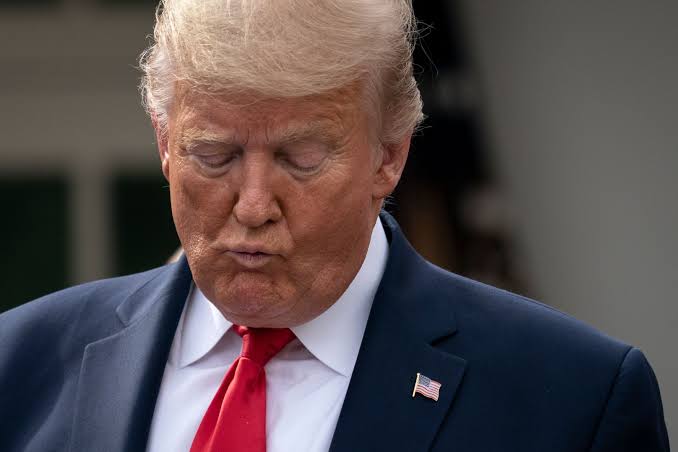
In 2025, US President Donald Trump warned that Washington could deploy military forces to Nigeria if the government failed to address what he described as widespread violence against Christians.
Following Nigeria’s designation as a Country of Particular Concern, the United States carried out an airstrike against Islamic State fighters in Sokoto State on Christmas Day.
Since then, both countries have intensified engagements focused on improving Nigeria’s security capacity.
Reports have indicated that up to 200 US military officers are expected to be deployed to Nigeria. The New York Times earlier reported that the first batch of American personnel — including intelligence analysts, advisers and trainers — had already arrived.
The deployment is said to support targeted counterterrorism operations and enhance intelligence gathering, with additional aircraft carrying troops and equipment expected to arrive in the coming weeks.
Experts React
A retired officer of the Nigerian Army Intelligence Corps, Chris Andrew, cautioned against interpreting the development as a combat deployment.
According to him, the US personnel are providing technical expertise rather than fighting troops, particularly in areas such as drone operations and precision air support.
“They are not bringing combat troops. What they are offering is technical support and training, especially in advanced drone technology and precision operations,” he said.
Andrew noted that Nigeria’s recent air operations have improved significantly following cooperation with the United States, citing the Christmas Day strikes on terrorist hideouts as an example.
“They are not supplying aircraft or attack helicopters. They are teaching us how to conduct operations with accuracy and efficiency,” he added.
He also suggested that Nigeria could benefit from hosting a US drone facility, especially following the withdrawal of American forces from Niger, describing such a move as long overdue.
Another security analyst, Chidi Omeje, described the development as evidence of effective diplomacy by the Nigerian government.
According to him, constructive engagement with the United States helped transform earlier tensions into cooperation.
“It would have been diplomatically damaging if Nigeria failed to engage properly. Instead, the government turned initial aggression into partnership and mutual respect,” Omeje said.
He stressed, however, that Nigeria must maintain full sovereignty in any military cooperation.
“What must not happen is foreign troops operating without consent or airstrikes conducted without approval,” he said.
Omeje added that Nigerians affected by terrorism and banditry are more concerned about results than process.
“If this partnership helps to end terrorism and restore safety, then it is acceptable. People just want their lives back,” he said.